AI is rewriting the assumptions behind every startup’s financial plan, often faster than the plan itself can keep up. This series looks at what that means for FP&A, one planning decision at a time — setting the plan, sizing the team, projecting runway, choosing metrics, and adjusting as the year unfolds. Each piece draws on what we’re seeing across the venture-backed companies we work with.
Runway (cash on hand divided by net monthly burn) measures how long a company has to reach its next milestone or raise its next round. Because runway moves with spending, it requires ongoing attention rather than a quarterly check. AI has introduced two new ways for runway to erode faster than a plan anticipates. These costs accumulate gradually, and they are behind many of the gaps we see between plan and actuals.
Underbudgeting AI Platforms
Usage-based AI costs — inference, tokens, and the tooling built on them — are difficult to forecast. Many companies come into planning without a real budget for this spend, or with a figure that actual usage quickly exceeds.
Even disciplined planning does not fully solve the forecasting problem. At one company, the engineering lead flagged its AI cost line as a real and hard-to-quantify risk while finalizing the annual plan. The team committed to tracking the line closely and tuning workflows to keep costs down. By mid-year, AI costs were still running at more than double the plan’s assumption — a gap that says more about how difficult these costs are to predict than about any lapse in planning. Runway held only because hiring had come in under budget, and the underspend on people absorbed the overage on AI. That is not an offset a plan can count on.
These overruns are difficult to catch early because the cost driver often remains invisible until it is reflected in the financials. An engineer may connect AI to a data-heavy workflow, and usage climbs from there without anyone deciding to spend more. Assigning an owner on the finance or engineering side to monitor that spend now belongs in the cash management process.
The Cost of Misreading AI’s Speed
The second risk is building the plan on the wrong assumption about how quickly AI will deliver. It is easy to assume that work that used to take three months now takes one. When the work takes longer than planned, the revenue tied to that faster schedule arrives late, but the cost of the build has already been incurred. That mismatch extends the period of high burn before revenue catches up, and the difference comes directly out of runway.
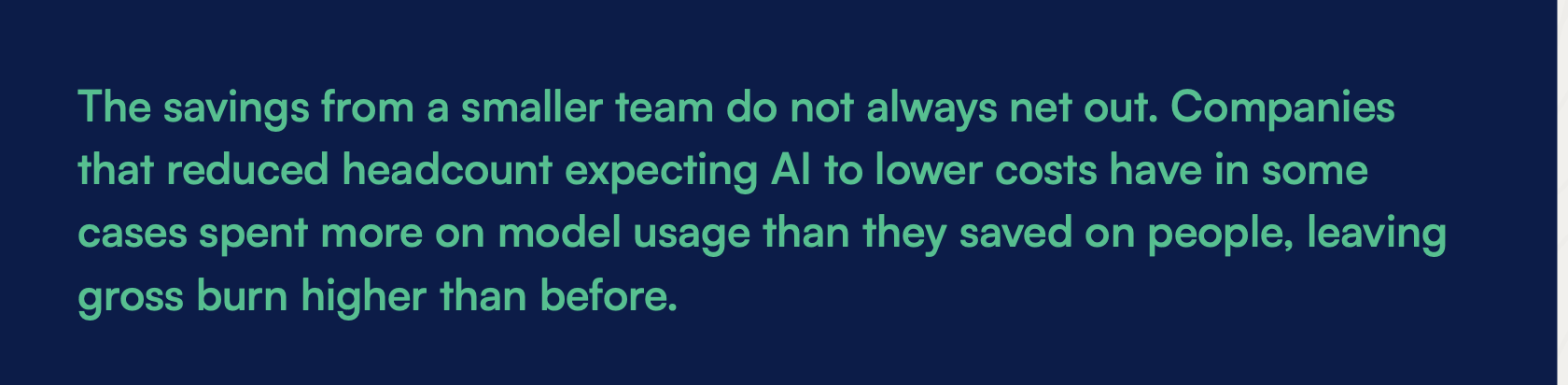
The savings do not come from AI replacing engineers. The tools are fast and capable, but they deliver the most value when experienced engineers are directing them and reviewing the output. A team without that senior oversight may find issues surfacing later in the build, when they are more expensive to address. A leaner plan still costs real money; it concentrates the spend in a smaller number of senior engineers rather than spreading it across a larger, more junior team.
Underestimating AI’s speed carries its own cost. A company that misjudges the pace in this direction may find the product ready before the sales team is in place to sell it. Go-to-market stalls while a competitor that planned for the faster timeline moves ahead. Either way, the assumption about AI-driven speed is one of the figures worth testing carefully before it is committed to the model.
Building Margin Into the Financial Plan
Both risks come back to timing. AI changes when costs land and when revenue follows, and both need to be planned as ranges rather than fixed figures. A few practices make this approach workable:
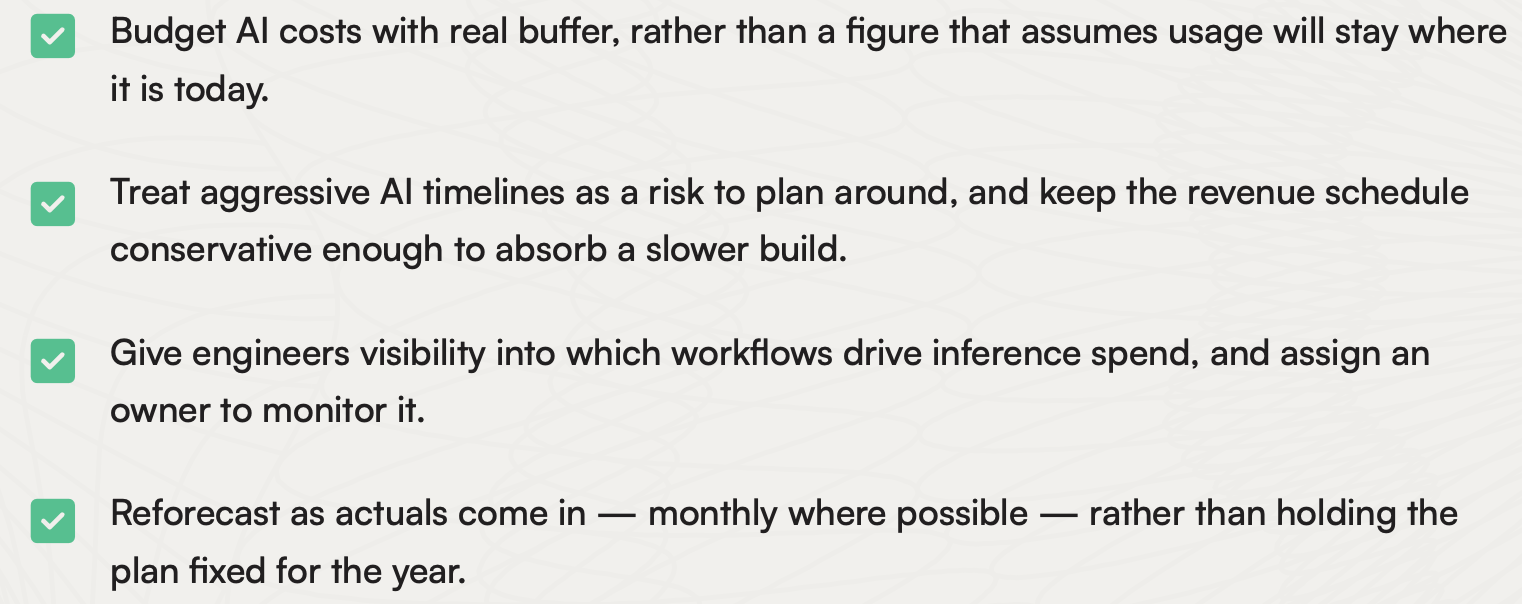
AI costs cannot be predicted precisely, and the pace of change is not slowing. Companies that reforecast frequently and build margin into their financial plan can pursue faster builds and leaner teams without putting runway at risk.